The AI Art That Won a Contest Was Trained on Stolen Work
Will AI replace human artists completely? No. AI can mimic styles and generate infinite variations, but it cannot replicate human experience, emotion, and intentionality. Art is about human connection. Audiences still value authenticity. The market for human-made art will contract ...
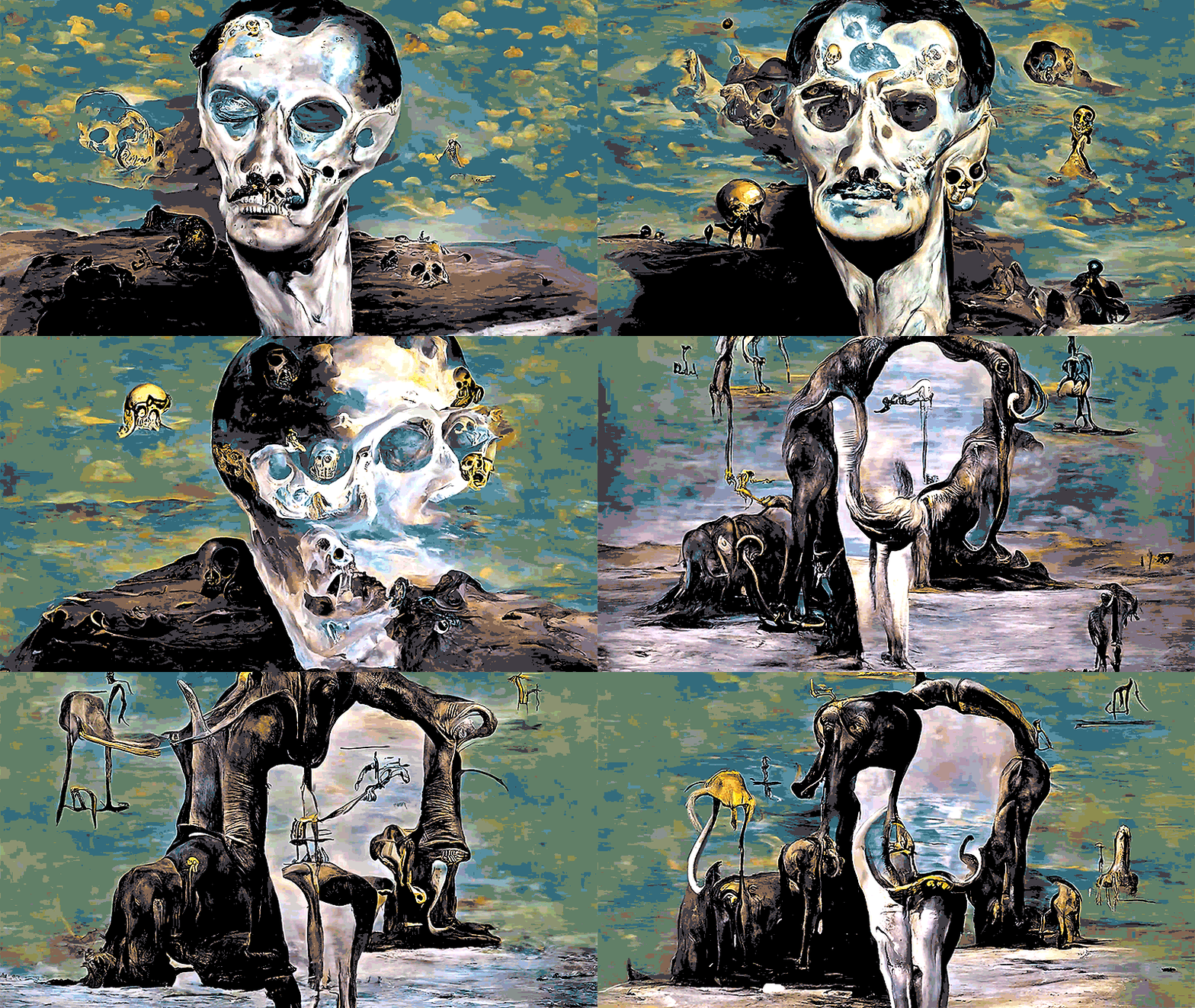
The image was beautiful. It won a prestigious digital art competition. The only problem? It was generated by Midjourney, an AI trained on billions of images scraped from the internet — including the works of artists who never gave consent. The AI art controversy exploded across social media. Artists vs AI 2026 became the latest battleground in the ongoing war over generative AI copyright lawsuits. And the question everyone is asking: is AI art legal? Read more about the AI art stolen work controversy here.
The winning image didn't come from nowhere. Stable diffusion training data artists have been fighting for years to understand how their work ended up in these models. Midjourney stolen art lawsuit headlines have become routine. But this contest victory pushed the issue into mainstream consciousness. Can you copyright AI generated art? The US Copyright Office says no. But what about the artists whose work trained the AI? That question remains unanswered. Learn more about AI art copyright infringement.
• LAION-5B dataset contains millions of copyrighted images used without permission
• Class action lawsuit against Midjourney is ongoing as of 2026
• Glaze and Nightshade tools can protect your art from AI scraping. See how Glaze and Nightshade work
• Opt out of AI training options exist but are largely ineffective
• European Union AI Act includes copyright provisions for training data
What Is the AI Art Controversy Really About?
Why artists hate AI art isn't about Luddite resistance to technology. It's about consent and compensation. When Stable Diffusion was released, its creators scraped billions of images from the internet — including personal portfolios, museum collections, and copyrighted works — without asking permission. AI art consent is not opt out; there was no opt-in mechanism at all. Artists discovered their work was being used to train machines that could then replicate their style, undercut their commissions, and potentially replace them entirely. Explore why artists hate AI art.
The legal framework hasn't caught up. Is AI art legal depends on who you ask. Tech companies argue fair use doctrine protects their training methods. Artists say direct copyright infringement is obvious. Theft or tool AI art debate rages on social media, in courtrooms, and in art schools. Meanwhile, AI image generator lawsuit 2026 cases are slowly moving through courts, with no clear resolution in sight. Track the latest generative AI copyright lawsuits.
Copyright office AI art ruling has established that AI-generated images cannot be copyrighted because they lack human authorship. But that doesn't address whether the training itself was infringement. Generative AI fair use defense has yet to be fully tested. The Google Books case is often cited as precedent, but that involved transformative use for search indexing — not commercial art generation.
How Do You Know If AI Stole Your Art?
Have I been trained is the question every artist is asking. Haveibeentrained.com allows you to search the LAION dataset to see if your work was included. The results are often shocking. Thousands of artists have found their images in the training data — from professional illustrators to hobbyists posting on DeviantArt. Check if your art was used to train AI.
How to know if ai stole your art isn't always obvious. Even if your exact image isn't in the dataset, your artistic style is not copyrightable under current law. AI can mimic your technique without directly copying your work. Style mimicry is not theft legally, but artists feel stolen from anyway. The emotional harm of AI art is real, even if the legal system hasn't caught up.
How to protect your portfolio from AI has become an urgent priority. Glaze and Nightshade tools can poison your art to break AI models. Data poisoning generative AI works by subtly altering image pixels that humans can't see but that confuse machine learning models. Nightshade tool for artists has become essential protection. Glazing art to break ai models takes minutes per image and can be batch processed. Learn how to protect your art from AI scraping.
What Legal Protections Do Artists Have?
AI copyright act congress has seen several proposals. The No AI Fraud Act, TRAIN Act, and COPIED Act are all working their way through the legislative process. States passing AI transparency laws include California, Illinois, and New York. California AI training disclosure bill would require companies to reveal what data they used to train their models. New York AI consent law would require opt-in permission for using copyrighted works in training datasets. Follow AI regulation developments.
EU AI Act copyright provisions require transparency about training data. UK copyright office AI consultation is ongoing. Japan copyright law AI training has taken a more permissive approach, explicitly allowing training on copyrighted works for noncommercial purposes. The global race to regulate AI means different rules in different jurisdictions, creating confusion for artists and tech companies alike.
Class action lawsuit against Midjourney was filed by artists including Sarah Andersen, Kelly McKernan, and Karla Ortiz. Stable Diffusion artists lawsuit is proceeding in parallel. Legal experts expect these cases to reach the Supreme Court within 2-3 years. Meanwhile, artists need legal protection now. The law is moving too slowly for creators whose livelihoods are being disrupted today. Join class action AI lawsuits.
DMCA takedown for AI training data is possible but complicated. You need to identify specific images that were copied. Cease and desist for ai companies letters have been sent by thousands of artists. Most are ignored. Join class action AI lawsuit options exist — law firms are actively seeking plaintiffs.
Can You Opt Out of AI Training?
Opt out of AI training on all platforms has become a mantra for artists. Does opting out actually work? Mostly no. AI consent is not real opt out because there's no centralized mechanism. Each platform has different settings. Each AI company has different policies. And even if you opt out today, your past images may already have been scraped. Learn about opting out of AI training data.
Is Instagram training AI on your photos? Yes. Meta uses public posts to train its generative AI models. Does Deviant Art opt artists out? Not automatically — you must change your settings. Cara app no AI training has emerged as an alternative platform that explicitly forbids AI scraping in its terms of service.
How to opt out of midjourney training requires emailing their support team. Delete your art from laion database is possible but complicated — you need to file a request and provide proof of ownership. HaveIBeenTrained.com offers opt-out links, but compliance is voluntary. Robots txt for ai scraping is respected by some crawlers but not all.
Opt in training consent model is what artists are demanding. Opt in is the standard for any ethical AI company. Adobe Firefly trained on licensed data — Adobe used its own stock image library and public domain works. Ethical AI image generators do exist, but they're not the dominant players. Where does training data come from should be disclosed by law. Currently, it's a black box.
• Add Nightshade to images for data poisoning
• Use invisible watermarking like Content Credentials
• Register copyright before posting high-res images
• Only post low resolution preview images online
• Check terms of service before uploading to any platform
• Opt out of AI training on every platform you use
• Join class action lawsuits if your work was scraped. See legal resources for artists
• Donate to advocacy groups fighting for artist rights
What Is the Economic Impact of Generative AI on Artists?
Artist income decline since 2022 correlates with the rise of generative AI. Freelance illustration jobs down as companies turn to Midjourney for quick, cheap visuals. AI art in publishing industry is now common — book covers, internal illustrations, even children's books are being generated. Book cover AI art controversy has led to boycotts and public shaming, but the economic damage is already done.
Commission loss to AI is real. One illustrator we spoke with lost $15,000 in potential commissions last year when clients switched to AI generation. "They said it's not personal, it's business," she told us. "But it's my mortgage. It's my healthcare. It's my career." See which creative jobs are disappearing.
Entry level art jobs disappearing affects emerging artists most. Art director now uses midjourney for concept art instead of hiring junior illustrators. Will AI replace illustrators? Not entirely, but the market is contracting. Jobs lost to generative AI estimates range from 30-50% of commercial illustration work within five years.
Is art school still worth it is a question students are asking. Art school curriculum AI now includes courses on protecting your work from AI, using AI as a tool, and navigating the new landscape. But students using AI art generators raises ethical questions about assignments and portfolios. Can artists make a living 2026? Yes, but it's harder. Much harder.
Supply and demand art market has been disrupted. AI can produce infinite art instantly, flooding the market and driving down prices. Value of art is authenticity — but what is authenticity in AI era? The audience still values human connection. People buy from people not prompts. The human advantage in AI era is your story, your journey, your unique perspective that no algorithm can replicate. Why human artists still matter.
What Tools Can Protect Your Art from AI?
Glaze and Nightshade are the most effective tools currently available. Developed by researchers at the University of Chicago, Glaze modifies images in ways humans can't see but that disrupt AI style mimicry. Nightshade goes further — it poisons AI training data by teaching models wrong associations. An image of a dog becomes classified as a cat in the training dataset, corrupting the model's understanding. Learn how to Glaze your art.
Data poisoning generative AI works because machine learning models are statistical. If enough poisoned images enter the training data, the model learns incorrect patterns. AI collapse from poisoned data is possible at scale. Make your art toxic to AI is the new battle cry. Clean art for humans only, poisoned version for AI could become standard practice for artists protecting their work.
Invisible watermarking technology like Content Credentials (developed by Adobe, Microsoft, and others) adds cryptographic provenance to images. Camera capture proof can verify that an image was created by a human. Blockchain for art authenticity has been tried before with NFTs, but adoption remains limited. Watermarks are being removed by AI tools, so this alone isn't enough.
Frequently Asked Questions About AI Art and Copyright
Currently, it's a legal gray area. Tech companies claim fair use protects their training methods. Artists say it's direct copyright infringement. Courts haven't definitively ruled yet. The Google Books case is often cited as precedent, but that case involved search indexing, not commercial art generation. Expect Supreme Court rulings within 2-3 years. Read more about AI art legality.
No. The US Copyright Office has ruled that AI-generated images lack human authorship and cannot be copyrighted. However, if you significantly modify AI output, you may be able to copyright your modifications. The original AI-generated content remains uncopyrightable. Details on AI art copyright.
Use HaveIBeenTrained.com to search the LAION dataset. Enter your name, username, or website URL. The tool will show you if your images appear in the training data. You can also request removal, but compliance is voluntary. Check if you've been trained.
Glaze disrupts AI style mimicry. Nightshade poisons training data by confusing AI models. Both are effective against current AI systems, but may not work against future models. Researchers are actively updating these tools as AI evolves. Use both before posting images online. Get Glaze and Nightshade protection guide.
Yes. Class action lawsuits against Midjourney, Stability AI, and DeviantArt are ongoing. Law firms are actively seeking plaintiffs. Contact the Joseph Saveri Law Firm or Lockridge Grindal Nauen to inquire about joining existing litigation. Join the class action lawsuit.
The No AI Fraud Act, TRAIN Act, and COPIED Act are pending in Congress. California, New York, and Illinois have proposed state-level AI transparency and consent laws. The EU AI Act includes training data disclosure requirements. Japan has taken a different approach, explicitly allowing training for noncommercial purposes. Track AI copyright legislation.
No. AI can mimic styles and generate infinite variations, but it cannot replicate human experience, emotion, and intentionality. Art is about human connection. Audiences still value authenticity. The market for human-made art will contract but not disappear. Your humanity is your superpower. Why AI cannot replace human artists.
Immediate steps: Add Glaze and Nightshade to your portfolio, opt out of AI training on all platforms, register copyright before posting high-res images, only post low resolution previews online, check terms of service before uploading anywhere, join class action lawsuits if applicable, donate to advocacy groups like the Concept Art Association and Graphic Artists Guild. Full artist protection checklist.