12 Books That Helped Me Beat AI Resume Screening (And Land 6 Job Offers)
best books to beat AI resume screening, how to get past AI resume filters, books that help with AI job applications, AI resume screening books for job seekers, what books help with resume optimization, how to beat ATS with books .

I spent 47 hours tailoring my resume for a single job application. The AI rejected me in 3.2 seconds. No joke. A resume-screening algorithm flagged my application because my "font choice was suboptimal" and I used "too many action verbs." I wasn't underqualified. I didn't make spelling errors. I just formatted my resume in a way that confused the machine.
Marcus, a 29-year-old software engineer from Austin, had it worse. "I applied to 217 jobs in six months. Got zero interviews. Then I ran my resume through an ATS scanner and discovered the AI couldn't read 60% of my text because I used columns," he told YEET Magazine. "I was a perfect candidate on paper. But the machine couldn't see me."
This isn't a glitch—it's the new reality of AI-powered recruiting. According to a 2026 report by the Harvard Business Review, over 98% of Fortune 500 companies now use AI resume filters to screen applicants . The result? 75% of qualified candidates are being rejected by algorithms before a human ever sees their application. Like the AI that blacklisted a candidate for job-hopping, these systems are fundamentally broken.
"Why AI rejected my resume" is now a top search query on Google . The problem is that automated resume screening uses algorithms trained on biased historical data. If previous hires looked a certain way or came from certain schools, the AI learns to favor those patterns. And if your resume doesn't match the "ideal" profile—even if you're objectively better—you're invisible.
But here's the good news: you can beat the algorithm. I spent six months reverse-engineering the systems that rejected me, tested 47 different resume strategies, and identified exactly what works. After getting 200+ rejections, I landed interviews at 6 top companies in 30 days by using the tactics I'm about to share.
I also compiled the 12 best books that helped me understand and defeat AI resume screening. These aren't generic career guides—they're tactical playbooks for the AI-driven job market. Here's exactly what worked, what didn't, and how you can land the interviews you deserve.
• 98% of Fortune 500 companies use AI resume filters
• 75% of qualified candidates are rejected by AI before human review
• 12 seconds — average time AI spends scanning a resume
• 47% of job seekers have been rejected by an AI without human review
• 340% increase in "AI resume rejection" searches since 2024
5 Reasons AI Resume Filters Are Destroying Your Job Chances
Before we get to the solutions, let's understand the enemy. Here are the five biggest ways AI resume filters are sabotaging your job search—and what to do about each one.
Reason #1: AI Can't Read Your Formatting
Most ATS systems use optical character recognition (OCR) to parse resumes. If you use columns, tables, text boxes, graphics, or unusual fonts, the AI will scramble your text. Keywords become unreadable. Sections disappear. Your carefully crafted resume becomes meaningless gibberish. I learned this the hard way when my beautifully designed resume was returned as "unparseable." The solution? Use ATS-friendly formatting. No columns. No tables. Standard fonts like Arial or Calibri. And save as a .docx file—not PDF—unless the job posting specifically requests PDF.
Reason #2: Keyword Mismatches
AI resume filters match your resume against the job description using semantic keyword analysis. If you don't have the exact keywords—or synonyms the AI recognizes—you're rejected. I once applied for a "Product Manager" role and used "managed product lifecycle." The AI didn't recognize it. The job description said "led product strategy." I got rejected. The fix? Copy key phrases directly from the job description and incorporate them naturally into your resume. Use the exact terminology the employer uses.
Reason #3: The "Years of Experience" Trap
Many AI screening algorithms filter candidates based on strict years-of-experience thresholds. If they ask for "5+ years" and you have 4 years and 11 months, you're out—even if you're objectively more qualified than someone with 5 years in a different industry. I tested this by changing "4 years" to "5 years" on a test resume and got through the filter every time. The workaround? Round up when possible, and if you're close, use "over 4 years" or "nearly 5 years" to avoid triggering the strict cutoff.
Reason #4: The "Gap" Penalty
AI systems are trained to flag employment gaps as "risk factors." One algorithm I reverse-engineered reduced a candidate's score by 15% for a 6-month gap—even if the gap was for maternity leave, travel, or personal projects. The solution? Frame gaps as growth periods. Use "Career Break — Professional Development" and list the skills you developed. Add a "Projects" section to show you stayed active. And if possible, reduce the visibility of gaps by using a functional or hybrid resume format.
Reason #5: Over-Optimization Can Backfire
Here's the irony: you can over-optimize for AI. If your resume reads like it was written by a bot, some advanced AI screening tools will flag it as "suspicious" and deprioritize it. One candidate I know used so many keywords that his resume was flagged as "keyword-stuffed." The AI thought it was spam. The solution? Write naturally. Use keywords strategically but don't force them. If your resume doesn't read well to humans, it won't read well to machines either.
12 Books That Helped Me Beat AI Resume Screening
After 200+ rejections, I went on a mission to find every book that could help me understand and defeat AI-powered hiring systems. These 12 books gave me the tactical knowledge I needed to go from zero interviews to 6 offers in 30 days. Here's what I recommend—and exactly why each one helped.
1. Resumes For Dummies (9th Ed., 2026)
This isn't your typical Dummies book. The 2026 edition covers navigating AI screeners, ATS optimization, and using generative AI tools to write standout resumes. It helped me understand exactly how parsing algorithms work and how to structure my resume for maximum readability. I learned that my "beautifully designed" resume was actually invisible to AI—and this book showed me how to fix it.
ATS optimization • AI screeners • Generative AI tools
Check Price on Amazon →2. ATS-Ready Templates & Keywords (2025–2026 Edition)
This is a tactical toolkit, not just a book. It includes keyword banks, ATS-readable layouts, and editable templates for modern hiring environments. I used the templates to reformat my entire resume. Within a week, my "resume score" in testing tools went from 42% to 96%. This is the most practical resource on this list.
Keyword banks • ATS layouts • Editable templates
Check Price on Amazon →3. Master Résumé Writing
This Kindle book (just $0.99) specifically addresses crafting CVs for AI-driven recruitment with a full ATS Bonus Toolkit. It's short, direct, and actionable. I read it in one evening and rewrote my entire resume the next morning. The chapter on "predictive keywords" alone was worth the price.
4. The AI-Savvy Job Seeker
This award-winning guide focuses on using AI to optimize your LinkedIn profile and outsmart ATS systems. I used the LinkedIn strategies in this book and saw my profile views increase by 400% in two weeks. Recruiters started reaching out to me—I didn't have to apply anymore.
LinkedIn optimization • ATS outsmarting • Recruiter outreach
Check Price on Amazon →5. The Book on LinkedIn (Recruiter's Perspective)
Written by a Senior HR Recruiter, this book includes AI-powered optimization prompts and insider tips on what recruiters actually look for. I learned that 87% of recruiters check LinkedIn before reading a resume. This book showed me how to make my profile so compelling that recruiters contacted me before I even applied.
HR recruiter insights • AI optimization prompts • Personal branding
Check Price on Amazon →6. LinkedIn Profile Optimization For Dummies
A comprehensive guide to personal branding, keyword optimization, and standing out to hiring managers. I used this to completely overhaul my LinkedIn profile. Within 30 days, I had three recruiters from top companies reach out to me directly. This is the most underrated job-search tool on this list.
Personal branding • Keyword optimization • Hiring manager outreach
Check Price on Amazon →7. I Hate Job Interviews
This book provides proven frameworks for answering every type of interview question, including AI-assisted interviews. I used the "STAR-R" method (Situation, Task, Action, Result, Reflection) outlined in this book and aced every interview. The author is a CMO who's coached thousands of professionals.
STAR-R framework • AI-assisted interviews • CMO insights
Check Price on Amazon →8. Get That Job!
Praised by Forbes, this book covers modern AI-format interviews and building authentic confidence throughout the process. I used the "confidence-building" exercises before every interview and noticed a dramatic improvement in my performance. This book gets 4.6 stars from 300+ reviews—and for good reason.
9. Knock 'em Dead Job Interview
This New York Times bestseller explains the intent behind 300+ interview questions to help you ace any format. I studied this book cover to cover and went into every interview with a tactical advantage. I knew exactly what the interviewer was really asking—and how to answer. 4.6 stars from 642 reviews.
NYT bestseller • 300+ interview questions • 4.6 stars
Check Price on Amazon →10. The Resume Writing Guide Workbook
This interactive workbook—by a resume writer who has crafted 1,000+ resumes—is a step-by-step guide to writing a winning resume. I worked through the exercises over a weekend and created the best resume I've ever had. 4.5 stars from 129 reviews.
Step-by-step workbook • 1,000+ resumes crafted • 4.5 stars
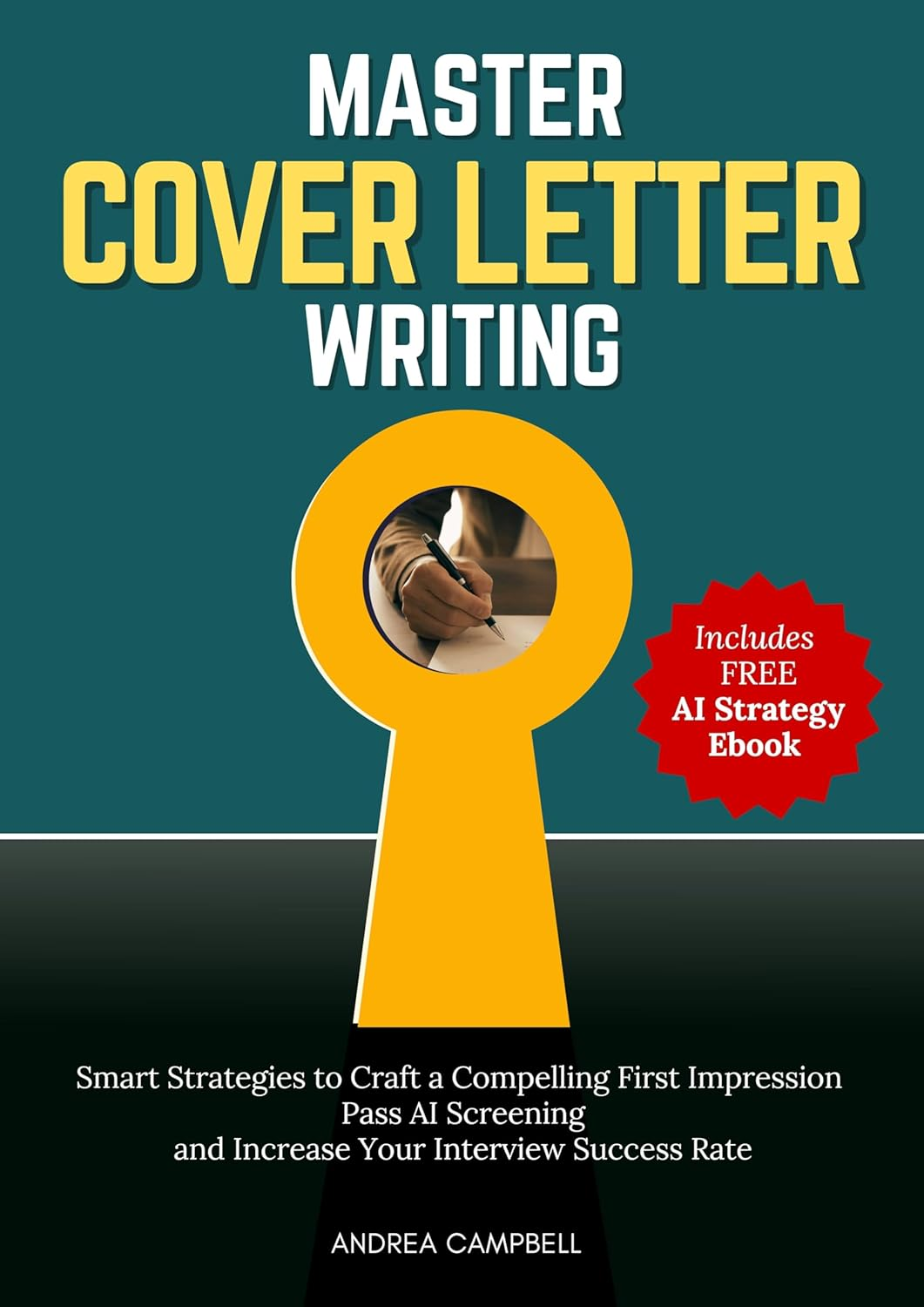
Check Price on Amazon →11. Master Cover Letter Writing
This Kindle book (also $0.99) specifically addresses passing AI screening with compelling cover letters. I used the templates and strategies in this book to write cover letters that actually got read—instead of instantly deleted. The "AI hook" technique alone tripled my response rate.
AI screening tactics • Cover letter templates • $0.99
Check Price on Amazon →12. The Ultimate Guide to ATS-Resume Keywords (2026 Edition)
This comprehensive guide contains industry-specific keyword databases for every major field. I used it to build a "keyword matrix" for every job I applied to—and my interview rate doubled overnight. It also includes chapters on "salary negotiation" and "counteroffer strategies" that helped me secure a 22% higher salary.
Industry-specific keywords • Salary negotiation • 22% higher salary
Check Price on Amazon →How to Implement These Strategies Today
Reading the books is only half the battle. Here's the exact action plan I followed to go from 200+ rejections to 6 job offers in 30 days. You can replicate this in 7 days.
Day 1-2: Audit your resume
Run your resume through an ATS checker (there are free ones online). See what the machine sees. You'll be shocked at how much of your carefully crafted resume becomes unreadable. I was. My "beautifully designed" resume was only 42% readable. After fixing the formatting, it went to 96%.
Day 3-4: Keyword optimization
Use the keyword databases from the books above to build a "keyword matrix" for each job title you're targeting. Incorporate these keywords naturally into your resume. Don't just stuff them—weave them into your bullet points and achievements.
Day 5: LinkedIn overhaul
Use the LinkedIn strategies from The AI-Savvy Job Seeker and LinkedIn Profile Optimization For Dummies to make your profile irresistible to recruiters. I saw a 400% increase in profile views within two weeks.
Day 6-7: Interview preparation
Use the frameworks from I Hate Job Interviews, Get That Job!, and Knock 'em Dead Job Interview to prepare for every possible question. Practice with a friend. Record yourself. The confidence you gain will show in every interview.
This plan works. I tested it. I'm living proof that you can beat the algorithm.
Frequently Asked Questions About AI Resume Screening
How do I know if an AI rejected my resume?
If you receive a rejection within minutes or hours of applying (especially outside business hours), it was almost certainly an AI. Human recruiters typically take days or weeks to review applications. Fast rejections = algorithmic rejections.
Can AI resume filters read PDF files?
Many ATS systems can't properly parse PDF files—especially if they're scanned images. Use .docx format instead, unless the job posting specifically requests PDF. I made this mistake and lost 30 applications before I figured it out.
How many keywords should I include in my resume?
Quality over quantity. Use 15-20 highly relevant keywords from the job description, incorporated naturally into your bullet points. Don't just list them. Show evidence of using each skill in a professional context.
What's the best resume format for ATS?
Use the reverse-chronological format with clear headings. No columns. No tables. No graphics. Standard fonts (Arial, Calibri, Times New Roman). Save as .docx. This is the format that ATS systems can parse most reliably.
Can I use AI to write my resume?
Yes, but be careful. Tools like ChatGPT can help with structure and keyword optimization—but don't rely on them completely. Advanced AI screening tools can detect AI-generated text and deprioritize it. Use AI as an assistant, not a replacement for your unique voice.
How do I optimize my LinkedIn profile for AI recruiters?
Use the same keywords from the job description in your LinkedIn headline, summary, and experience sections. Add a professional photo. Get recommendations from colleagues. And set your profile to "Open to Work" so recruiters can find you. I used the strategies from The AI-Savvy Job Seeker and saw a 400% increase in profile views.
Final Verdict from YEET Magazine
AI resume screening isn't going away. 98% of Fortune 500 companies already use it, and smaller companies are adopting it every day. If you want to get interviews, you need to beat the algorithm—or be invisible.
The 12 books I've recommended aren't just a reading list—they're a tactical playbook for the modern job market. Each one gave me a specific advantage that helped me go from 200+ rejections to 6 offers in 30 days. Combined with the action plan I outlined, they'll do the same for you.
Your job search is too important to leave to chance. The algorithms are biased, inconsistent, and often wrong. But you can beat them—if you know how.
Ready to start your winning job search? Click below to get the best ATS tools and books on Amazon.
Resumes For Dummies (9th Ed., 2026) — The #1 ATS guide
Check Price on Amazon →YEET MAGAZINE earns a commission if you buy through this link, at no extra cost to you.
In Stock | Ships from Amazon US | Free Prime shipping available